


|
|---|


Wednesday, November 29, 2006

She was one of the leading players on the women's circuit in the late-1980s and early-1990s. She won the women's singles title at the US Open in 1990, the women's doubles title at Wimbledon in 1988, and a silver medal at the 1988 Olympic Games.
In 1989, she launched her own perfume, simply named "Gabriela Sabatini." Sabatini was inducted into the International Tennis Hall of Fame on July 15, 2006.
Recently she was listed at top among the world's all time "Top 10 Tennis Beauties" by chinise media Xinhua News Agency.
Other player who figured in the list in order: Chris Evert, Steffi Graf, Anna Kournikova, Martina Hingis, Daniela Hantuchova, Mary Pierce, Maria Sharapova, Justine Henin-Hardenne and Sania Mirza.
Tuesday, November 28, 2006

Cheryl Burke was nominated twice for Outstanding Choreography on the 2006 Emmy Awards, making her the youngest nominee in that category.
Check our more information about Cheryl here.
Monday, November 27, 2006

She became the first Indian woman to reach the fourth round of a Grand Slam tournament at the 2005 US Open, defeating Mashona Washington, Maria Elena Camerin and Marion Bartoli. In 2004, she finished runner up at the Asian Tennis Championship. On February 12, 2005, she became the first Indian woman to win a WTA singles title defeating Alyona Bondarenko of Ukraine in the Hyderabad Open Finals.
Sania won the Wimbledon Championships Girls' Doubles title in 2003, teaming up with Alisa Kleybanova of Russia.
As of September 2006, Sania has notched up three top 10 wins against Svetlana Kuznetsova, Nadia Petrova and Martina Hingis.
She was 5th in the list of Top ten Asian female players as of October 2006.

A Chinese photographer moves to the U.S. Here, he discovers bodies. Bodies as social places. Bodies as identifiers, as the places of definition. How does the place one belongs to relate to the body one owns (isn't this a beautiful expression? to own a body...)?
Shen Wei's series Almost Naked is a guided tour of identity caught in body. Or of the body as caught up in identity. Whichever way you put it, there is a feeling of self, that is, that the pictures are not of the person's body, but of a person as she reveals/hides herself. There is a certain foreigner's curiosity of how the others deal with who they are, what they are, and what they can present to someone else. This curiosity, and the way the subjects deal with it, is one of the most delightful aspects of Wei's work.
Once I achieve the trust of the model, I can feel their energy and their desire to be seen and be explored but at the same time still reserve some for themselves. It is in those Almost Naked moments that my subjects are the most exquisite, when things occur, and what generally is not displayed initially in public is exposed. I emotionally and physically strip the sitters when the trust and friendship is built between us. The key to building that trust and friendship is to make them feel at ease with conversation and personalized emotion contact. It can sometimes be psychological, sometimes more sensual, sometimes more or less sincere, depending upon the personality of the sitters and the intimate level of the environment. It is the art of psychology within making art.
 None of the people smile.
I found this through the placebokatz blog, which to my great joy (as always when that happens) has put a link to this humble page.
Sunday, November 26, 2006


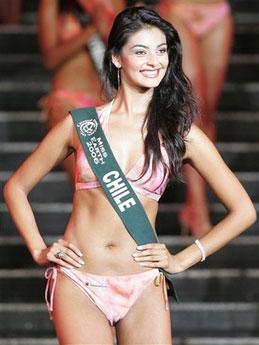
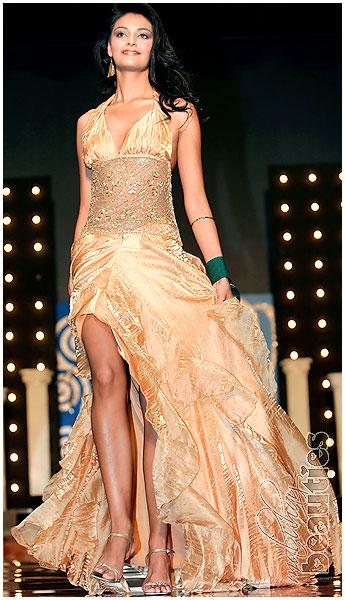

Miss Earth Air 2006 awarded to Miss India, Amruta Patki.
Miss Earth Water 2006 awarded to Miss Philippines, Catherine Untalan.
Miss Earth Fire 2006 awarded to Miss Venezuela, Marianne Puglia and she was also awarded best in swimsuit.
The rest of the special awards are as follows :-
Miss Photogenic awarded to Miss Canada, Riza Raquel Santos.
Best in Talent awarded to Miss China, Zhou Meng Ting who performed a Dan-Ching-Fan dance during the Miss Earth 2006 Final Talent competition held at the Teatro Marikina last Nov 22.
Miss India, Amruta Patki also received an award for Best in Long Gown.
Miss Friendship awarded to Miss Italy, Maria Lucia Leo.
Best in National Costume awarded to Miss Samoa Mililani Vienna Tofa.
Hearty Congratulations to All Winners :-).
Check out our previous post of Miss Earth 2003 participant Vida Samadzai here and 2006 participant from India Amruta Patki here.

You can find more pictures and information about Baby Zhang here.
Check out profile of other Super Girl winner Li Yuchun here.
Saturday, November 25, 2006

Shonibare's most famous works play on the idea of origin and power. The first lecture is clear: headless people are scrambling for Africa. They are dressed in European clothes, but made of African fabric. They are false. But this goes further. The type of cloth they use, called batik, is used throughout Africa (and not only) and considered a local tradition. But, as Shonibare says, that is not the case:
...the fabrics are not authentically African – they were produced by the Dutch in the 19th century and then subsequently by the English for sales to the African market.That makes the situation even more absurd and scary. What is left of Africa? And what can be left for Africa?
But there is another issue related to Shonibare that has been interesting me more. The freedom of the artist vs. the necessity of his functioning well in the system.
Let's start off with this:

Yinka Shonibare, The Swing (after Fragonard) (2001)
How much does the artist need to know about what he is doing?
And really the idea behind it is to draw a parallel with the relationship between the contemporary first world and third-world countries. I want to show that behind excessive lifestyles there are people who have to provide the labour to make this kind of lifestyle happen.But generally I think I made a piece of work about this painting because I actually admire the work very much. And I like the contradiction of taking something that’s supposedly ‘ethnic’ and putting that onto classical European painting.

All this seems fairly light, naive, compared to what the critics have to say about Yinka Shonibare's works. Does this mean he is unaware of the worlds he is creating? Is he simply using strong imagery that brings about a huge load of references? Possibly. Does that change anything? Does that make him a worse artist? Should the artist be his own critic? Should he be a philosopher as well?
Obviously, the artist part of being an artist is to make art. And then, see what happens. That's in the ideal world. In the one I know, the artist also sells his product, by being who he is, by having the life he has, by speaking the way he speaks. This doesn't signify the impossibility of defending oneself through work alone, but certainly makes it all the more difficult. And brings another issue.
What if Yinka Shonibare didn't make contemporary ethnic art? What if his work were just contemporary, and dealt with, say McDonald's or sex or any other issue? And let's imagine, for the sake of the argument, that it weren't any worse than what he is doing now. Would we know him? Who would he be? Would it matter that he is black, was born in London, lived in Nigeria and studied at Goldsmiths? There is a very irritating way the art world defines itself through basic associations of life and work. Possibly this has to do with the art having moved into a direction that is so difficult to judge (although artists like Shonibare play remixing the old school in a somewhat old-school way) that more is required in order to give it value (clearly also market value).
Isn't there something wrong with this picture? Some sort of an obsession that has more to do with the way one is seen than with the way one sees? Of course, Bacon had enough guts to spill them over and over again on the canvas. But let's put it bluntly: most of us, most of artists, are not Francis Bacon. And still, they keep on painting the same painting. Looking for what? Perfection? Style? Truth? Exploring? Or self-branding, self-censoring?

Yinka Shonibare, Toy Painting 26 & Toy Painting 27 (2005)


